The Human Story of Richard brasser
A life of Hard Work, Integrity, and Resilience - And the Federal Government's Failure to See It
Most people will never meet someone like Richard Brasser.
He grew up with an incredible enthusiasm for learning, built a life through grit and work ethic, succeeded in fields that demand discipline and honesty, raised a family, contributed to his community, and gave far more than he ever took. He is the kind of person federal policy is supposed to protect — someone who acts in good faith, owns his mistakes, and does everything right when life goes wrong.
But Richard’s story is not simply one of achievement.
It is a story of loss, devastation, perseverance, and ultimately betrayal by a system that failed to honor its own rules.
This is the part of the story the legal filings cannot capture — the human experience behind the transcripts, the years that shaped his decisions, and the suffering his family endured while he continued to do what was right.
If Congress does not understand this human dimension, it cannot fully understand the injustice of this case.
A Childhood Shaped by Curiosity and Responsibility

Richard was the kind of kid who never sat still. By eleven years old, he was producing an award-winning radio show on public broadcasting. By twelve, he won the Chicago City Science Fair. He worked jobs from an early age, first selling watermelons on Chicago beaches for long hours in the summer heat, then creating a business that painted house numbers on curbs in North Carolina.
Nothing was handed to him. He learned to work for everything. That work ethic stayed with him for life. He excelled in academics, entered college early, completed degrees with perfect marks, and ultimately gained acceptance to Harvard Business School while balancing a demanding career at the number one consulting firm in the world. He did this not out of ambition alone, but out of a sense of responsibility to provide for his family, to create jobs, to build something meaningful.
A Life of Relentless Effort and Achievement

Richard’s adult life reads like the biography of ten different people.
He became a Class-A PGA professional.
Competed as a touring professional golfer in Asia.
Flew thousands of hours as a commercial pilot.
Led digital transformations for Fortune 100 companies.
Founded and built multiple businesses.
Was honored nationally as an entrepreneur and business leader
Was a Partner at Boston Consulting Group.
Attended Harvard Business School at age 55.
To those around him, none of this was surprising. Richard always worked harder than anyone else in the room. He created jobs. Generated economic growth. Donated time and money to youth programs, cancer foundations, and local charities.
Raised over $800,000 for children battling cancer. He was, and is, the kind of American who lifts others with him.
And Then, Everything Burned. Literally.
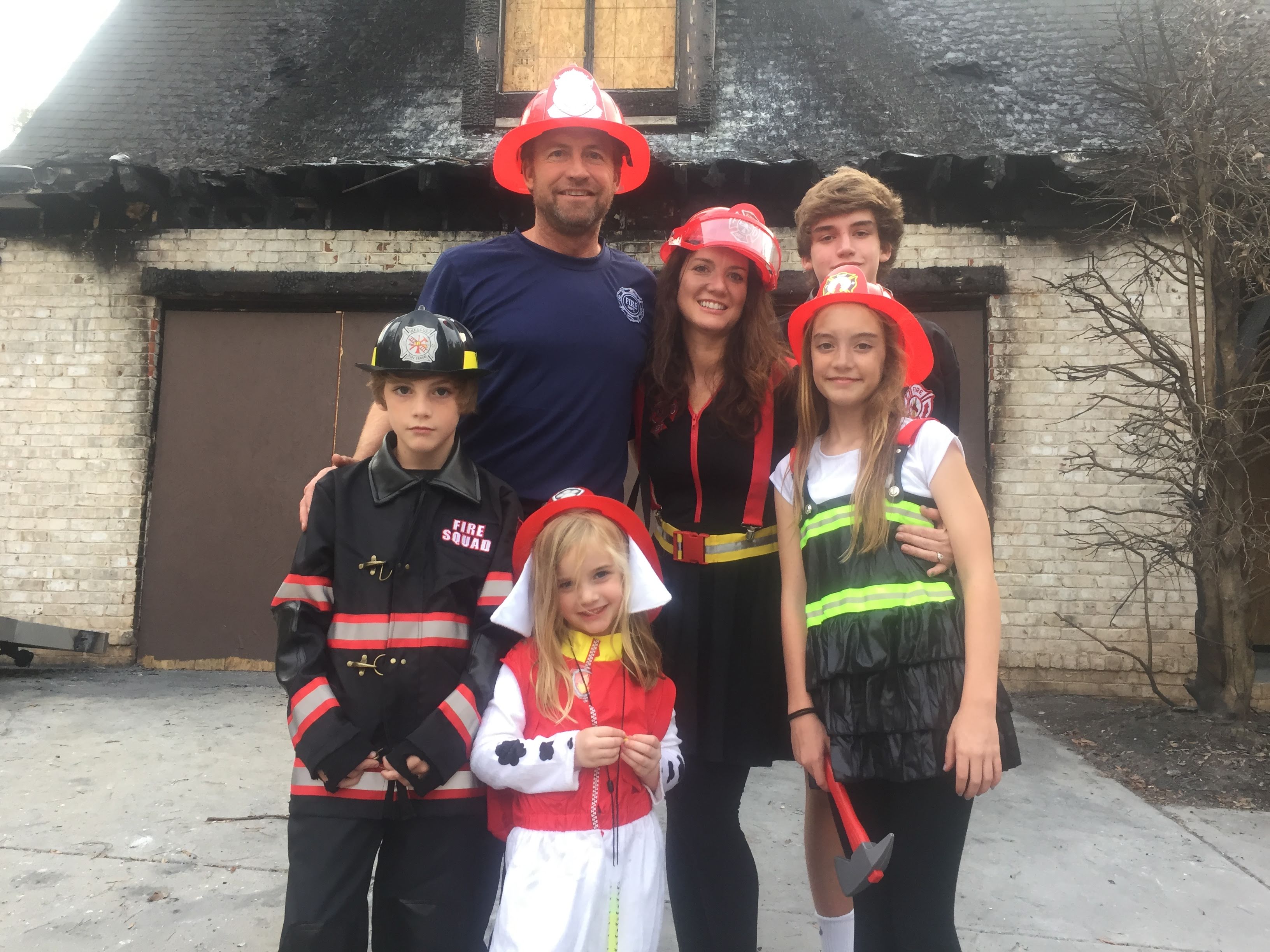
At almost midnight in September 2016, Richard was awakened by his wife who suspected that something was wrong. Four minutes later they barely escaped with their four kids after discovering their house was on fire. They watched from the curb as everything they owned burned to the ground.
The family was left displaced, grieving the loss of nearly every physical piece of their life.
And yet, the disaster did not stop there.
The contractor hired to rebuild the home stole insurance funds, leaving them financially exposed and delaying reconstruction for years.
A storage facility holding what few possessions remained or had been purchased after the fire suffered theft.
The family lost even more.
While enduring these traumas, Richard was trying desperately to keep his company, rFactr, alive.
A Business in Crisis — And a Leader Who Took the Hard Road
rFactr was Richard’s creation, a technology company built with over $1.5 million of his personal investment and years of sweat and sacrifice. But in 2016, a hostile investor and the sudden collapse of revenue brought the company into severe financial distress.
Most executives in this position would have paid themselves first.
Richard didn’t take a salary.
Most would have cut employee health insurance.
Richard paid for it out of pocket.
Most would have walked away.
Richard fought to save jobs.
During this crisis, payroll taxes fell behind, a common event in distressed small businesses.
But unlike most, Richard did not hide it.
He did not ignore it.
He did not minimize it.
He did not take the easy road.
He self-reported.
Before the IRS ever contacted him.
Before any investigation began.
He hired professionals, gathered records, and voluntarily entered the IRS Voluntary Disclosure Program, the very program Congress created to encourage honesty rather than punishment.
This is what federal tax policy is designed to reward.
The IRS Recognized His Good Faith — And Resolved the Matter Completely
For five years, Richard worked directly with IRS Revenue Officer Andrew Wallis. He provided records, answered questions, made payments, and followed the process exactly as the IRS asked.

And the IRS treated him the way the Voluntary Disclosure Program intends:
As a civil taxpayer, not a criminal.
Revenue Officer Wallis testified under oath:
“I never referred this case to the criminal investigation division.”
Those eleven words should have been the end of the story.
The IRS accepted Richard’s good faith.
The IRS accepted his disclosure.
The IRS accepted his cooperation.
When rFactr eventually closed, Richard took personal loans against his home — the same home he had only just rebuilt after the fire— and paid every dollar owed, including penalties and interest.
The IRS issued an official lien release in December2021.
Case closed.
Matter resolved.
Compliance complete.
Richard had done everything the federal government askedof him.
Everything a responsible citizen could do.
Everything Congress intended the Voluntary Disclosure Program to achieve.
The DOJ’s Decision — A Policy Failure With Human Consequences

Then, out of nowhere, years after the IRS closed the matter and long after Richard paid everything he owed, the Department of Justice indicted him.
No new evidence.
No IRS referral.
No allegation of concealment.
No claim of personal enrichment.
Just a decision to criminalize conduct the IRS had already resolved using the program Congress designed.
Former DOJ and IRS officials, including Mark Matthew's, former Deputy Commissioner of the IRS, have described this indictment as:
“One of the most egregious examples of prosecutorial overreach I have ever seen.”
In 2024, a jury examined the evidence and rejected every charge requiring proof of intentional misconduct.
They found no fraud.
No concealment.
No criminal intent.
Yet Richard now faces incarceration — after doing everything right.
The Personal Toll — What the Government Never Acknowledged

Throughout this eight-year ordeal, Richard endured:
• The destruction of his home
• Theft of his remaining possessions
• Fraud by a contractor
• Collapse of the company he built
• Personal financial devastation
• Years of rebuilding
• Multiple court delays
• Enormous legal expense
• The emotional fallout affecting his four children
• Public stigma
• Professional damage
• Grave uncertainty about his future
At every stage, he continued to comply.
To cooperate.
To take responsibility.
To provide for his family.
To remain honest.
He acted in the exact good-faith manner Congress wants taxpayers to act when something goes wrong.
And yet he finds himself punished not for wrongdoing…
…but for doing what the law asked of him.
Why Richard’s Story Must Be Told
This is more than a tax case.
It is a human story that reveals a failure in policy and principle.
Richard is not a criminal.
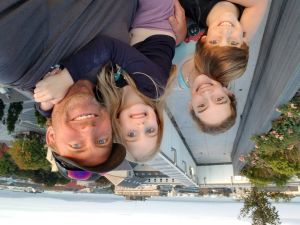
He is a father.
A builder.
A contributor.
A survivor.
A man who faced devastation, rebuilt, repaid everything, and still ended up in the crosshairs of a system that was supposed to protect taxpayers like him.
Senators, journalists, and citizens need to understand this truth:
If this can happen to someone who voluntarily discloses, cooperates fully, repays every dollar, and has no history of misconduct, it can happen to anyone.
Richard's story is a warning about what happens when government agencies do not honor their own programs, policies, or promises.